
Last updated November 23, 2026
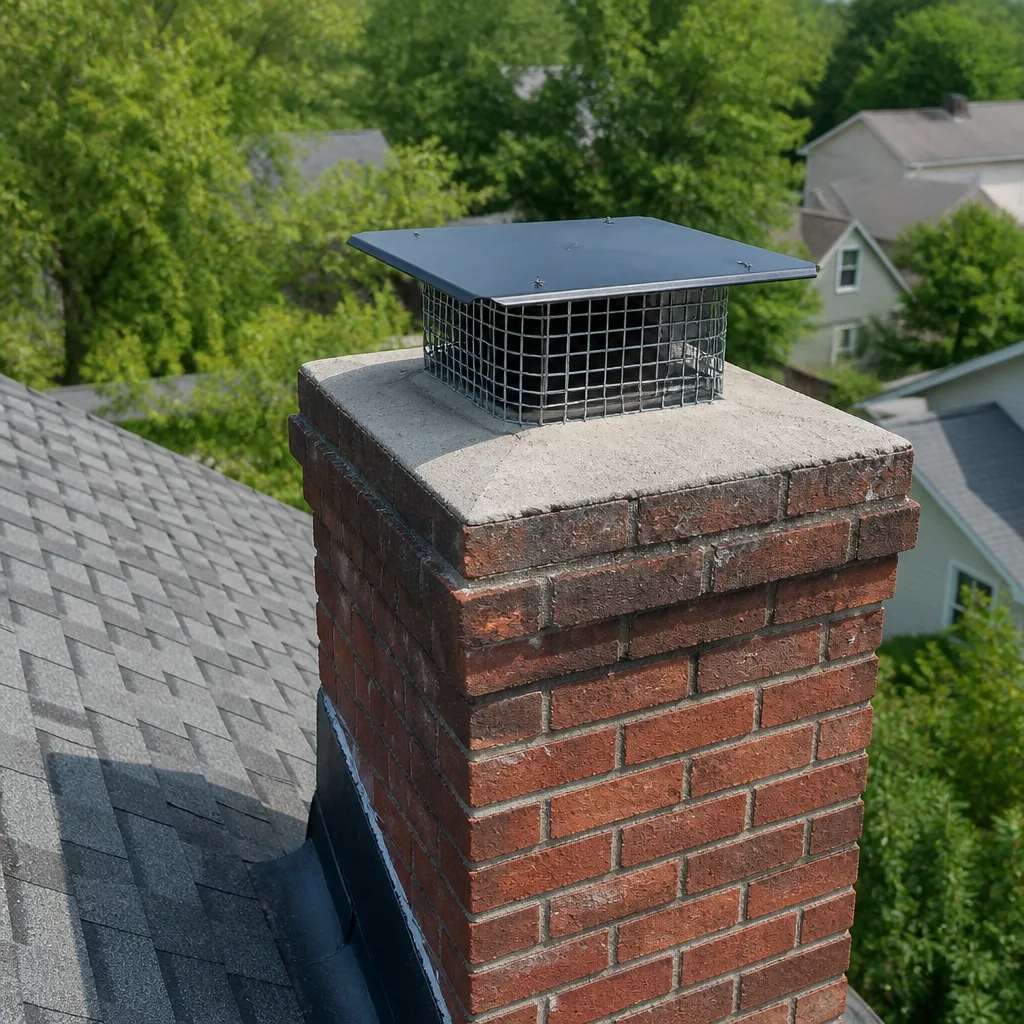 Sweep & inspection
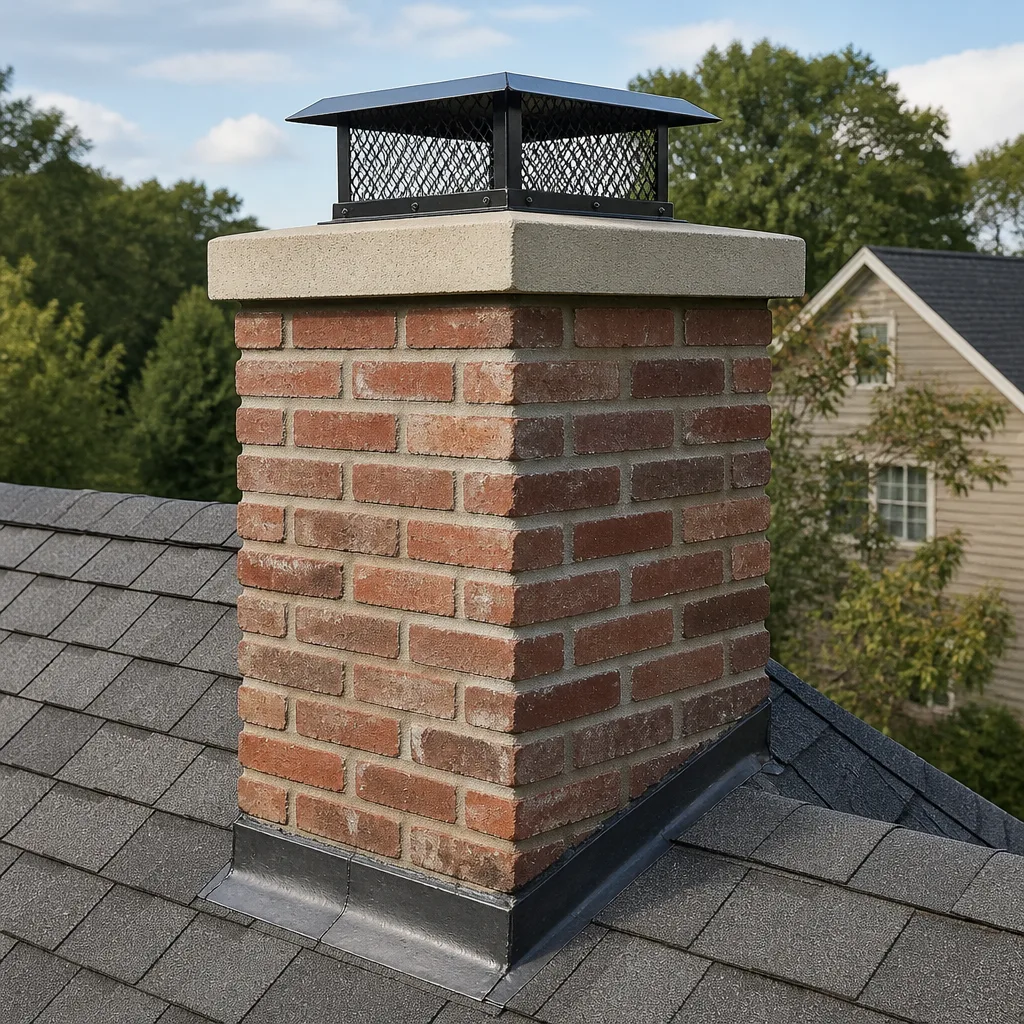 Caps & crowns
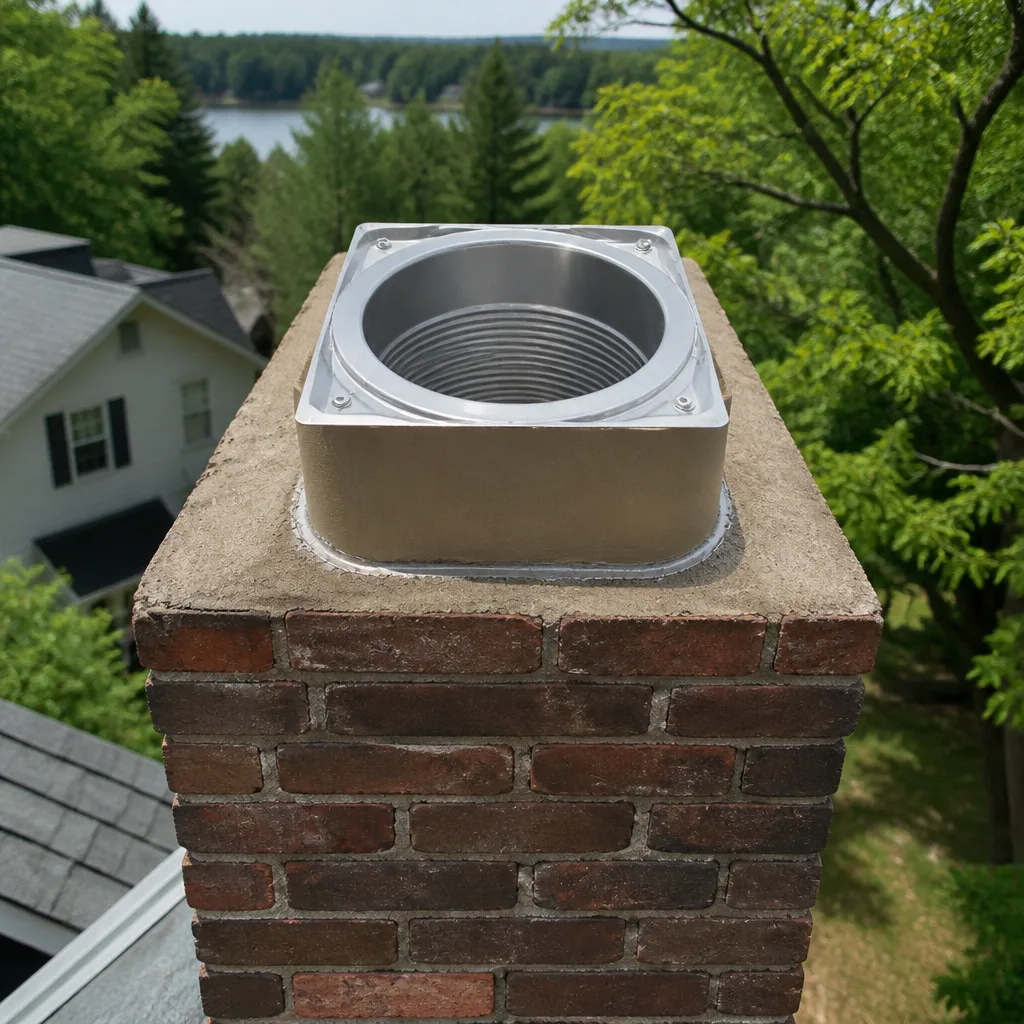 Flue relining
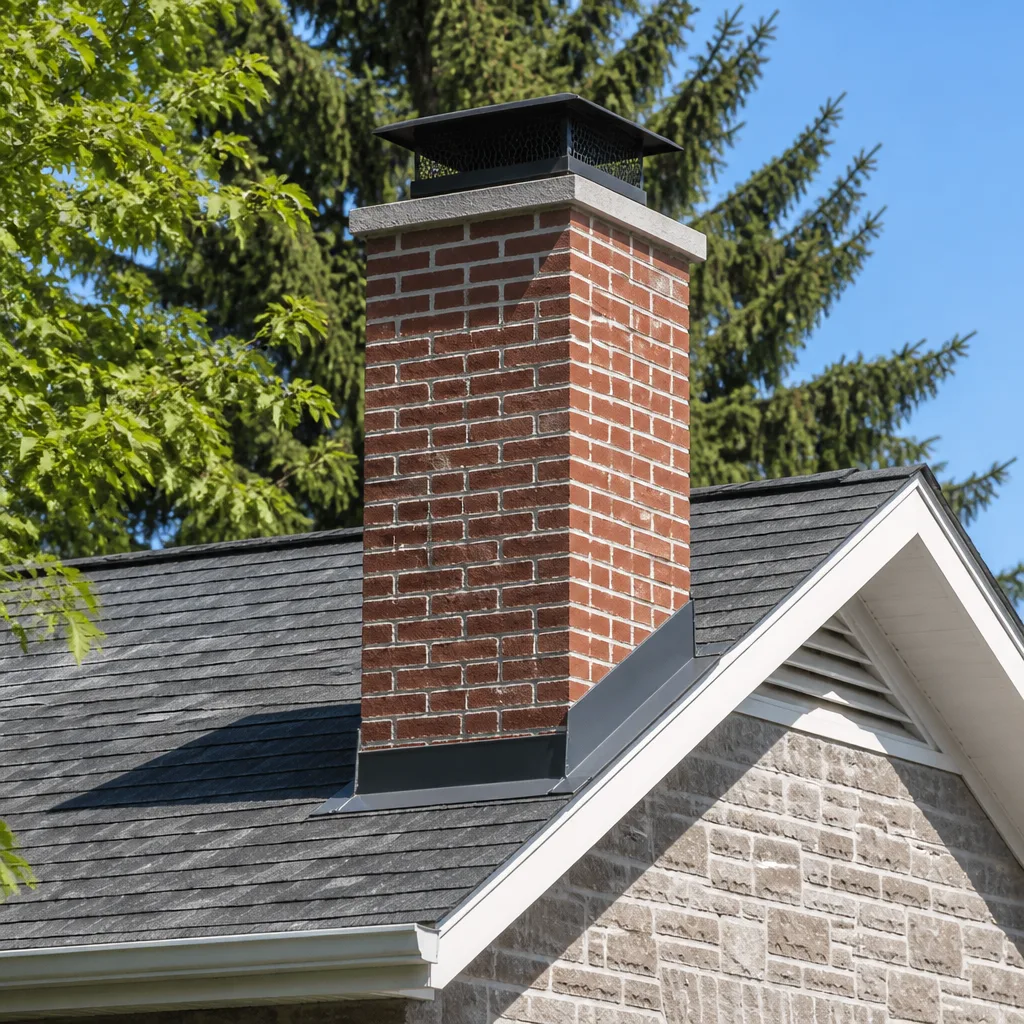 Masonry repair
 Gas fireplace service
Level 1 sweep and inspection to the NFPA 211 annual standard - flue, crown, cap, and flashing checked and photographed
Chimney sweep logs do not sweep chimneys. They loosen some creosote - which then falls where a brush and vacuum still have to collect it.
Chimney Sweep Maintenance Checklist for Commerce City Homeowners
Most chimney checklists floating around the internet are useless in Commerce City. They tell you to “inspect your cap for damage” without explaining what a failing cap looks like after a season of Front Range hail, or to “watch for crumbling mortar” without telling you which kind of crumbling is cosmetic and which means water is already inside your flue. This guide takes a different approach: every task is tied to a visible condition you can actually check, so you can tell normal wear from a real problem. You’ll learn what to look at from the ground and the firebox opening, what to write down after each burn season, and exactly when a finding means calling a certified sweep.
Quick Answer
A chimney maintenance checklist for a Commerce City home should cover four checks you can do safely yourself (cap, crown, exterior brick, firebox) plus two that require a professional (flue interior and damper). Do the visual checks twice a year, log your burn season after every winter, and book an annual chimney sweep and inspection. Anything involving the flue interior, a stuck damper, or missing mortar above your roofline needs a certified sweep, not a DIY fix.
Styles & brands we work with
- Sweep & inspection
- Caps & crowns
- Flue relining
- Masonry repair
- Gas fireplace service
Table of Contents
- Why Commerce City Weather Is Hard on Chimneys
- Ground-Level Checks You Can Do Safely
- Inside the Firebox: What to Look For
- The Burn-Season Log That Makes Your Sweep More Useful
- Hardware Signals: Dampers, Chase Covers, and Smoke Chambers
- Hail, Wind, and Storm Checks Specific to Commerce City
- The Handoff Point: Routine Monitoring vs. Calling a Pro
- When the Annual Sweep Should Happen
Why Commerce City Weather Is Hard on Chimneys
Commerce City sits on the eastern edge of the Denver metro, and that position exposes a masonry chimney to two forces most chimney care guides ignore. The first is freeze-thaw. A brick chimney absorbs moisture during a warm afternoon, then the temperature drops below freezing overnight and that water expands inside the brick and mortar. Repeat that cycle enough and the face of the brick starts to flake and pit, a process called spalling. Spalling isn’t just ugly; it’s a sign water is penetrating the masonry and will eventually find the flue.
The second force is hail. Commerce City sits in a hail belt that drives stones down onto roof-level components more often than most homeowners realize. A chimney cap, a crown, and a chase cover take that impact directly because they’re the highest, most exposed pieces of the system.
Add Front Range wind, which pushes fine debris into open flues, and the local environment asks more of a chimney than the generic “have it swept once a year” advice suggests. That’s why this checklist weights exterior and hardware checks as heavily as the interior sweep. If your flue is the most overlooked fire-safety system in your home, the exterior is the most overlooked part of the flue.
If you’ve never had the system looked at, the sensible first step is a professional Chimney Sweep Commerce City visit that establishes a baseline. Every check below is easier to interpret once you know the starting condition.
Ground-Level Checks You Can Do Safely
You can assess a surprising amount of your chimney from the ground with a pair of binoculars or a phone camera with zoom, without climbing on the roof. Height work on a pitched roof is genuinely dangerous, and this checklist never asks you to get up there. Stand back, look up, and compare what you see against these criteria.
The chimney cap
A sound cap sits level, its screen or mesh is intact, and its sides are straight. A cap showing hail damage has dents or creases in the metal, a screen pushed inward, or fasteners that have pulled loose. Rust streaks running down the cap and onto the brick below signal a cap that’s failing. A missing or damaged cap lets water and animals straight into the flue, which is why it’s the first thing to check after any significant storm.
The crown
The crown is the concrete or mortar slab on top of the chimney that sheds water away from the brick. A good crown overhangs the edges of the chimney and slopes gently away from the flue. Check for cracks, especially where the crown meets the flue, for gaps at the edges, and for pieces that have broken away. A hairline crack in the crown lets water in every time it rains or snow melts, and water in the crown is the beginning of the spalling you’ll read about below.
Exterior brick and mortar
Mortar joints between bricks should look tight and roughly uniform in color. What you’re watching for is crumbling or sandy mortar that rakes out easily with a fingernail, brick faces that are flaking or pitting, and white chalky staining on the brick. That white staining is efflorescence, a mineral deposit left behind when water moves through masonry and evaporates. It’s a strong early indicator that moisture is getting in somewhere above.
The flashings and roof junction
Where the chimney meets the roof, look for lifting, cracked, or missing flashing and for gaps where the roof covering meets the brick. This is the most common path for water to reach the attic and ceiling, and it’s often visible from the ground at an angle.
None of these ground-level checks requires a ladder. Write down what you see each spring and fall, and the patterns get obvious fast.
Inside the Firebox: What to Look For
The firebox is the one part of the system you can inspect up close without climbing anything. It’s also where homeowners most often misjudge a problem. Here’s what to look at with a flashlight before your first fire of the season and again when the burning ends.
- Firebrick condition. Firebricks line the firebox and are built to take direct heat. Sound firebrick is solid with tight joints. Cracks wider than a hairline, a brick that crumbles when you touch it, or missing brick in a joint means the firebox lining has failed and heat can reach the structure behind it. That’s a stop-and-call situation.
- Mortar joints in the firebox. The mortar between firebricks should be intact. If you can pick it out with a screwdriver, it’s failing.
- Damper operation. Open and close the damper by hand. It should move through its full range and stay where you set it. A damper that sticks, won’t open fully, or won’t stay open is a hardware problem you’ll read about below.
- Ash and creosote buildup. Look up at the smoke chamber above the damper with a flashlight. A light, sooty coating is normal. Glistening, tar-like, or flaky buildup is creosote, and creosote is what actually burns in a chimney fire. Heavy creosote means it’s time to stop burning and book the sweep.
- Signs of water. Rust on the damper, a damp smell, or staining on the firebox walls points to water coming down the flue from a failed cap or crack above.
- Loose or missing hardware. Grate, log lighter, and any screen should be intact and clear of the fire when you inspect.
For deeper firebox work, including relining or resurfacing with professional materials like HeatShield cerfractory, that falls under fireplace repair and is a job for a specialist who can see the whole flue, not just the opening.
The Burn-Season Log That Makes Your Sweep More Useful
This is the piece almost every checklist skips, and it’s the one that gives a sweep real data instead of guesses. A chimney sweep who knows how much wood you burned, what kind, and how the fire behaved can tell whether you’re due for a routine cleaning or whether something in the system is causing excess creosote. Keep a simple notebook or a note on your phone.
Log the following after each burn season:
- How many fires you had. A rough count is fine. Even “about forty fires” tells a sweep more than nothing.
- How much wood you burned, in cords or fractions. This ties directly to creosote accumulation.
- What kind of wood, and how dry it was. Seasoned hardwood burns cleaner than green or soft wood. “Mostly wet wood from a spring delivery” is a meaningful note.
- How the draft behaved. Note whether smoke rolled into the room on start-up, whether the fire was hard to get going, and whether the damper needed a particular setting.
- Anything that smelled, dripped, or looked off. A smell of smoke in the room, water stains, or a damper that got harder to move as the season went on.
- Any storm events after the burning season. If a hailstorm or high-wind event hit Commerce City, note it and check the cap and crown.
The goal is a two-minute record that makes your annual inspection far more targeted. When you book your chimney sweep, share those notes and the sweep knows where to look first. That’s a better use of everyone’s time than a blind cleaning.
Hardware Signals: Dampers, Chase Covers, and Smoke Chambers
Chimney hardware rarely fails all at once. Each component gives warning signs first, and knowing them is the difference between a small fix and a structural repair. Here’s what each one tells you before it goes.
Dampers
A top-sealing damper is the most common upgrade homeowners ask about, and the signs you need one are clear: the throat damper no longer seals tight, you feel cold air coming down when the fireplace is off, or you get smoke in the room on start-up. A damper that’s hard to move, or that won’t stay open, is the classic failing signal. If yours is stuck or rusted, that’s a professional fix, not a spray-and-wiggle job.
Chase covers
On a prefab or factory-built fireplace, the chase cover plays the role the crown plays on a masonry chimney. It’s the metal lid over the chase. Look for dents from hail, seams that have opened, rust bubbling through paint, and gaps where the chase cover meets the flue. A dented or corroded chase cover lets water in and costs far more to ignore than to replace. When it’s time to replace, professional brands like Copperfield and Olympia Chimney make covers and caps built to hold up to Front Range weather.
Smoke chambers
The smoke chamber is the tapered space between the damper and the flue. It should be smooth so smoke flows up and out. Rough, corbelled brickwork in the smoke chamber, or heavy creosote in its corners, disrupts draft and is a fire risk. A sweep can chamber-scan this area and tell you whether it’s a cleaning job or a resurfacing job.
The flue liner
The flue liner is the most critical safety component in the whole system, and for many homeowners it’s the one they know least about. On a masonry chimney it’s usually a clay tile liner; on a prefab it’s a factory steel liner. A liner that’s cracked, has gaps between tiles, or has lost chunks of its wall lets heat and combustion gases reach the structure. This is the component where a professional inspection matters most. If the liner has failed, a reline with a system like DuraFlex addresses the single most important fire-safety element. For any repair that touches the liner, mortar, or structural brick above the firebox, the right service is chimney repair, not a surface patch.
Hail, Wind, and Storm Checks Specific to Commerce City
After any significant storm in Commerce City, add these checks to the list. They take five minutes and they catch the damage the local climate dishes out most reliably.
After a hailstorm
- Cap: look for new dents, bent screens, and loosened fasteners. Hail often damages the cap before it damages the roof.
- Crown: fresh cracks or broken edges, especially on the side facing the prevailing storm.
- Brick faces: new spalling or pitting that appeared after the storm, which suggests impact damage on top of existing moisture wear.
- Chase cover: new dents and seam gaps from stones hitting the metal lid.
After high wind
- Cap security: a cap that shifted or turned has fasteners that need to be checked, because a loose cap can blow off and leave the flue open.
- Debris in the flue: fine grit, leaves, and twigs get driven into open flues in Commerce City. If you notice debris on the firebox floor or damper, that’s wind-driven material coming down the flue.
- Flashing: high wind can lift flashing at the roof junction, and that’s where water usually gets in.
The point of storm checks is timing. Catching hail damage to a cap or crown right after the storm lets you replace a cap instead of repairing masonry that water has been soaking into for months. When you need a cap or crown replaced, professional brands like Famco and Olympia Chimney are built for this climate rather than the thin metal most hardware stores stock.
The Handoff Point: Routine Monitoring vs. Calling a Pro
The most useful part of a checklist is knowing what belongs to whom. Here’s a clean split between what you monitor and what a professional should handle.
Routine monitoring (you)
- Annual photos of the cap, crown, exterior brick, and firebox, kept in a folder on your phone so you can compare year to year.
- The burn-season log.
- Seasonal damper operation check by hand.
- Clearing ash and keeping the firebox clean.
- Checking the firebox and smoke chamber with a flashlight for new creosote, cracks, or water signs.
Call a professional (us)
- Any creosote accumulation beyond a light sooty film, especially glistening or tar-like buildup.
- Cracked or missing firebrick, or mortar you can pick out with a screwdriver.
- A stuck, rusted, or non-sealing damper, or a yearning for a top-sealing damper.
- A cracked crown, missing cap, dented chase cover, or loose flashing.
- Any suspicion that the flue liner is cracked, gapped, or damaged.
- Water stains, a smoky smell in the room, or smoke rolling into the living space.
- Any repair above the roofline, because roof work at height is a job for trained professionals.
There’s a safety caveat worth stating plainly: the flue interior, the damper mechanism, and anything above the roofline are the parts of a chimney where a mistake can cause a fire or send carbon monoxide into the house. We never recommend homeowners disassemble or “test” a flue. What you can safely do is look, photograph, and log. What a trained technician does is reach into the flue with the right tools, camera, and training.
When the Annual Sweep Should Happen
In Commerce City, the best time for an annual sweep is before the burning season starts, not in the middle of it. Late summer and early fall give a sweep time to find and fix a problem before the first cold snap, and there’s no scramble when the weather turns. If you burn all winter, a mid-season inspection is worth it when you’ve burned heavily, and a spring visit after the season catches the damage the winter did.
Here’s a simple yearly sequence that works for most Commerce City homes:
- Spring: do your ground-level checks after the burn season, do the firebox inspection, write up your burn-season log, and photograph the cap, crown, and brick for your records.
- Late summer: book the annual chimney sweep and inspection, share your log, and get any findings on record before fall.
- Early fall: address any cap, crown, or hardware items found in the inspection, and confirm your damper is operating correctly.
- After storms: run the hail and wind checks, and book a professional look when you see damage you can’t fully assess from the ground.
An inspection covers far more than a sweep. The sweep cleans the flue; the inspection evaluates the liner, smoke chamber, damper, and exterior for the issues this checklist is built to surface. We identify the problem before we quote the fix, and that’s the order that matters.
Common Mistakes to Avoid
- Treating a hailstorm as a roof problem only. In Commerce City, hail hits your chimney cap and crown before it hits anything else. If you call a roofer after a storm, walk the ground and check the chimney too, because a dented cap is easy to miss from the driveway.
- Climbing on the roof to “look at the cap.” Height work on a pitched roof causes real injuries, and the cap is visible from the ground with zoom. Leave the roof work to trained technicians and inspect from below.
- Ignoring white staining on the brick. Efflorescence looks like a decorative crust but it means water is passing through the masonry. Treat it as a signal, not a stain, and find the source above.
- Burning wet or unseasoned wood because it’s cheaper. Wet wood makes more creosote, and creosote is what actually burns in a chimney fire. Spend the extra on seasoned wood and your flue stays cleaner.
- Assuming a prefab fireplace needs no maintenance. A prefab system still has a liner, a chase cover, and a smoke chamber, and those fail. The checklist applies to prefab as much as masonry.
- Skipping the log because “it’s just a fireplace.” The log is what turns a generic sweep into a targeted inspection. Without it, your sweep starts blind.
- Delaying a sweep to save time. Skipping a season lets creosote and water damage compound. The bill grows the longer you wait, and the fire risk grows with it.
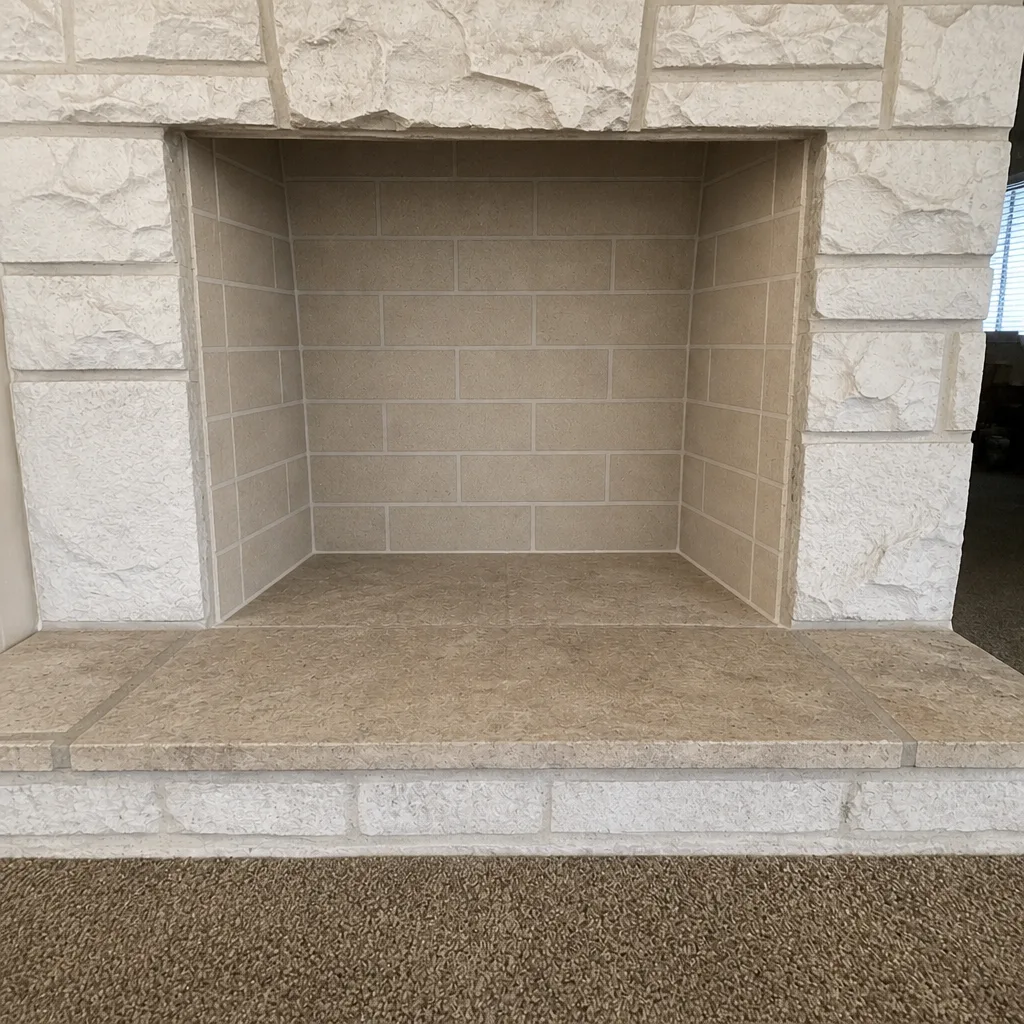
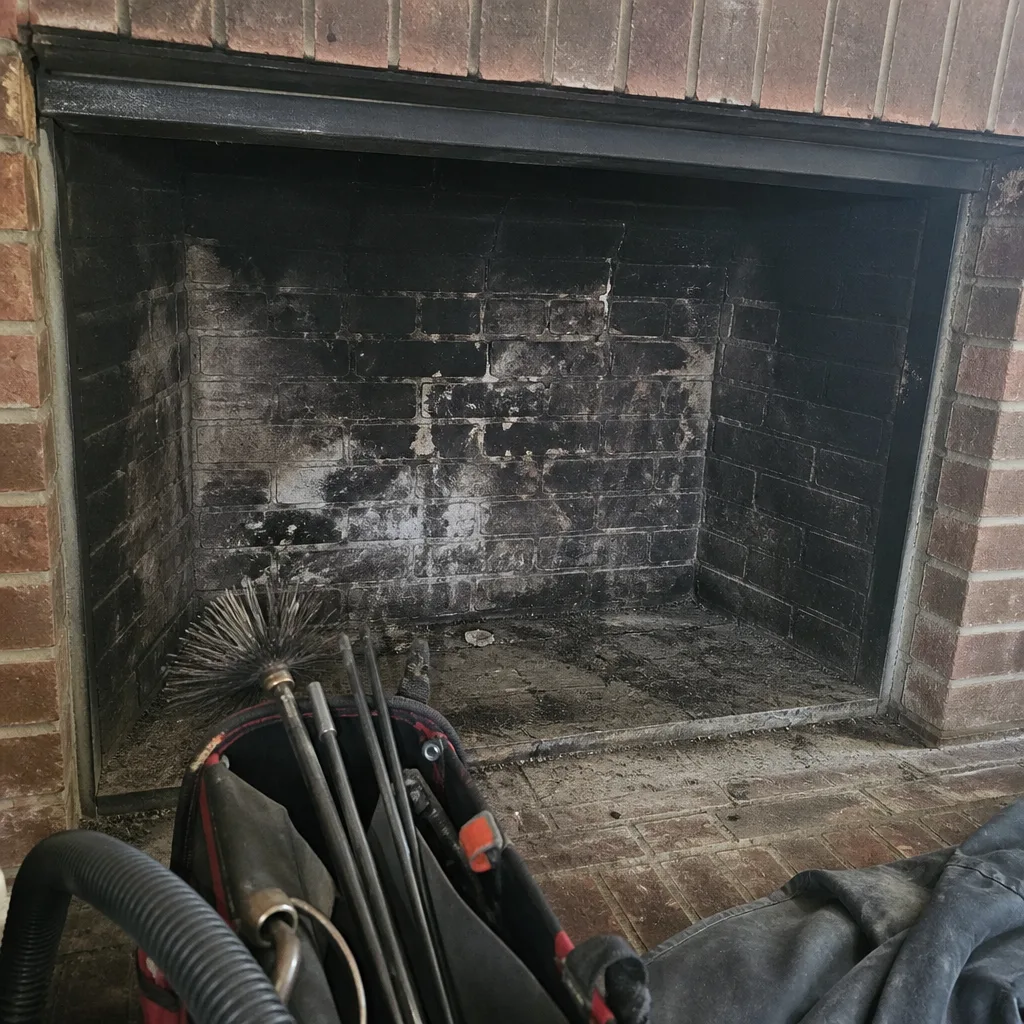
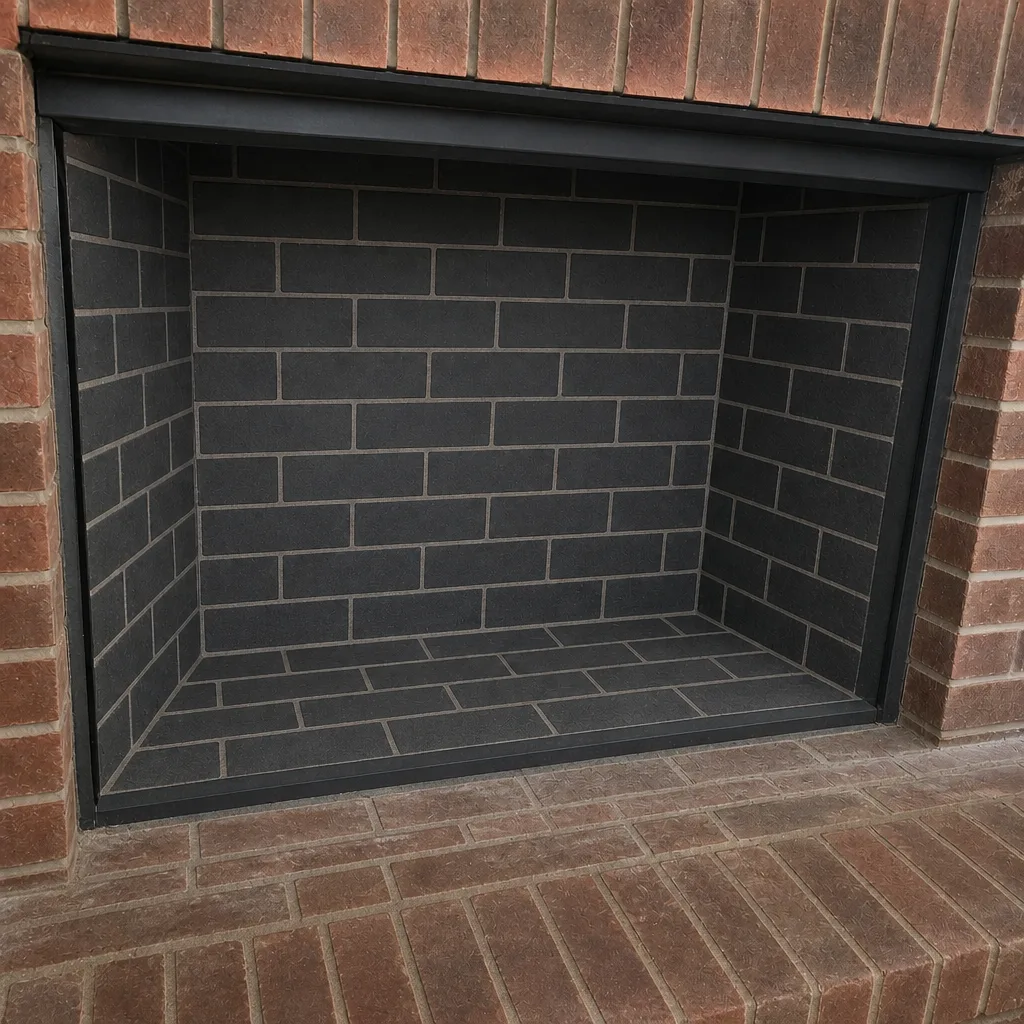
See the difference
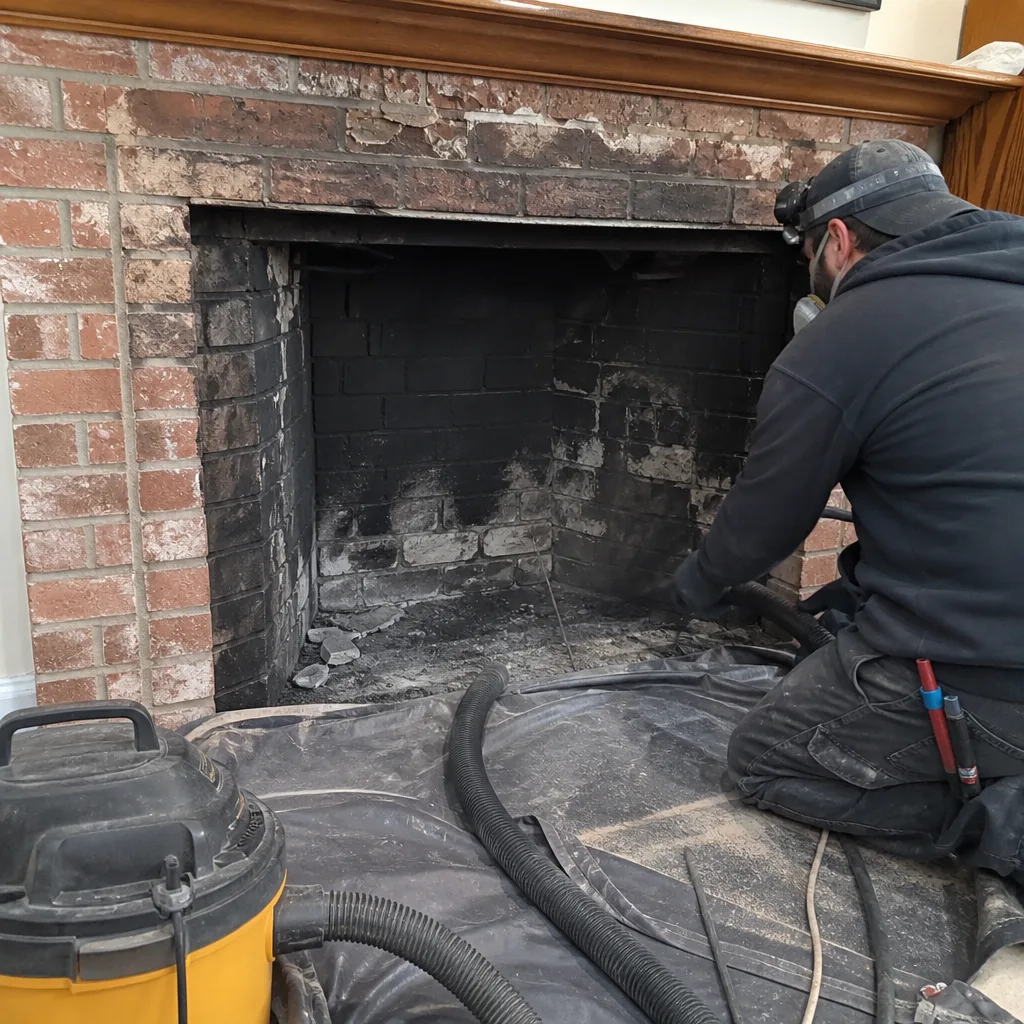 Before
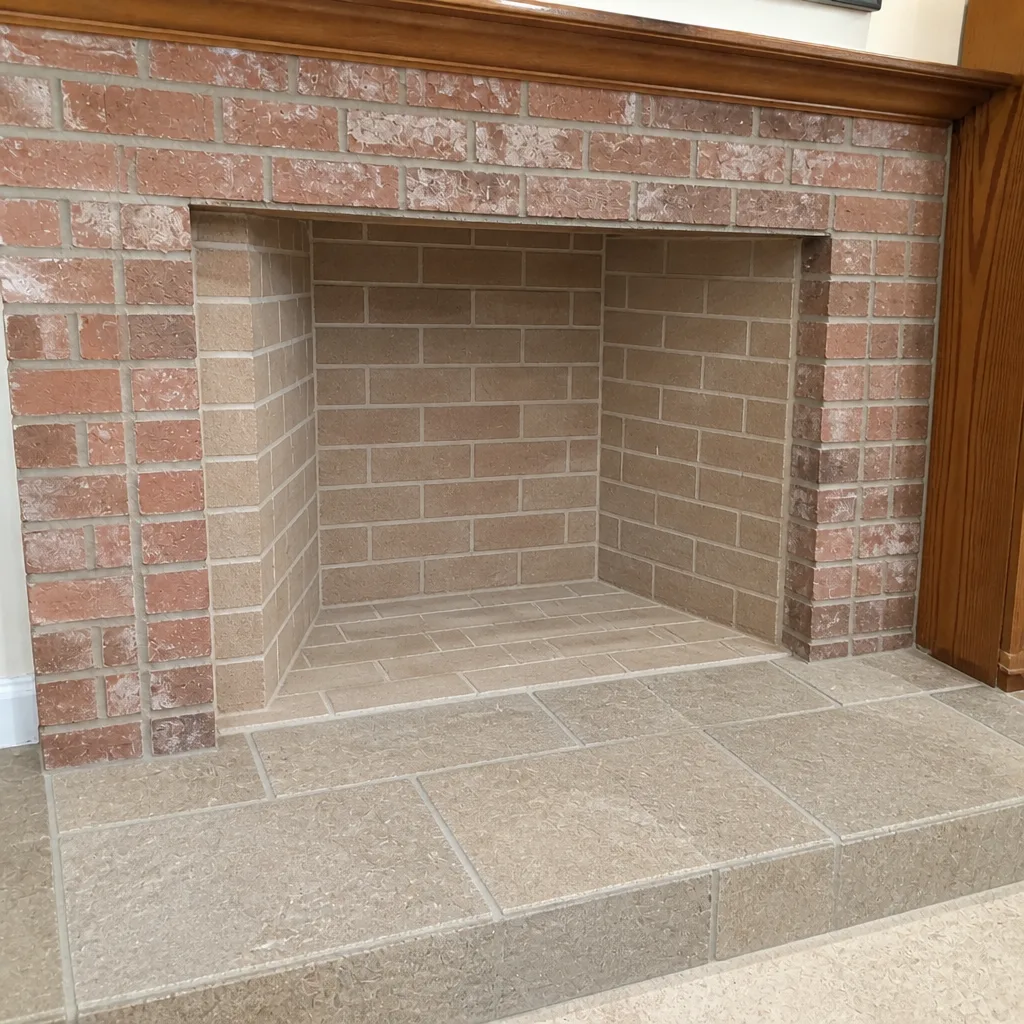 After
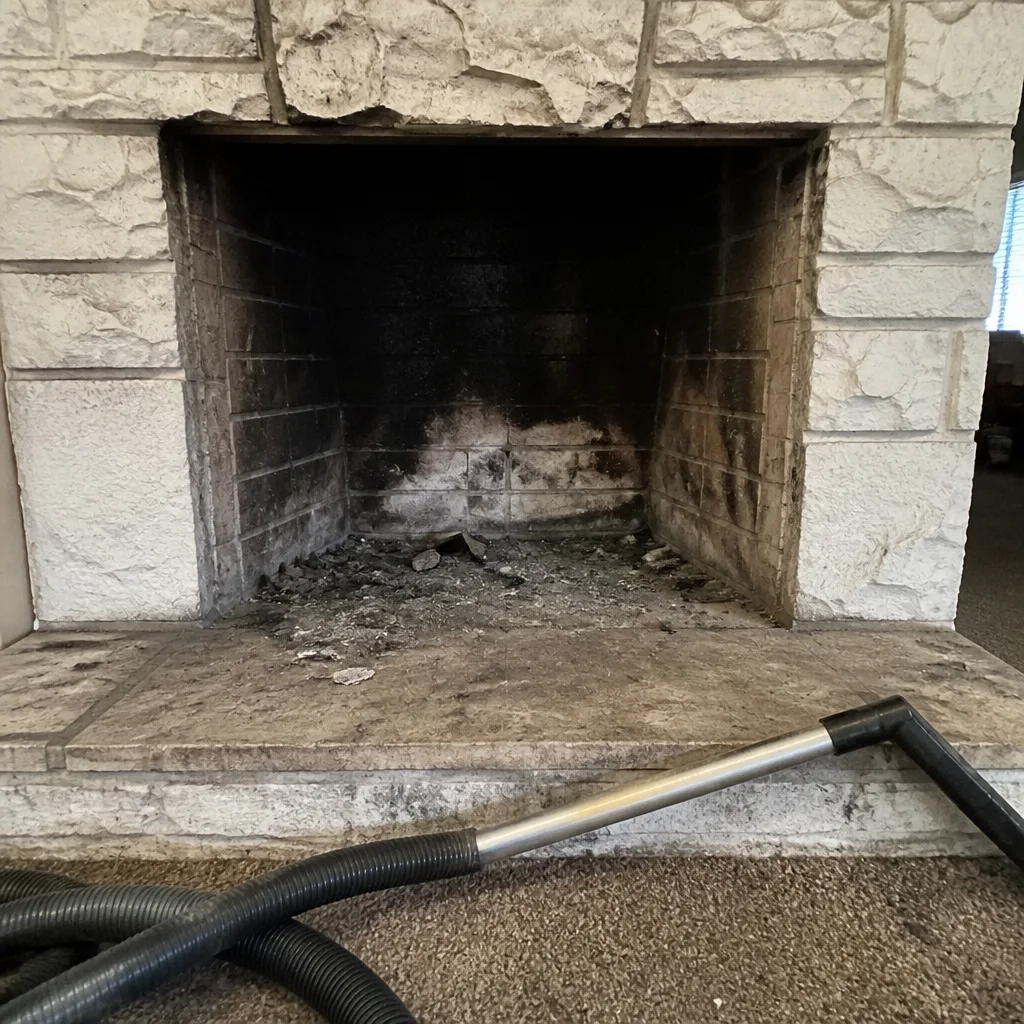 Before
 After
 Before
 After
When to Call a Professional
Call a professional the moment a finding crosses from “looks worn” to “looks failed.” That means a cap that’s dented or disappeared, a crown with open cracks, mortar that crumbles when touched, firebrick that’s cracked or missing, a damper that won’t seal or open, any sign of water inside the flue, or glistening creosote above a light soot film. Those are the conditions where a trained technician with a camera and the right tools needs to look before you burn again. The flue liner and the chimney structure are not DIY territory, and a small fix done correctly now is a far better outcome than a structural repair later.
Chimney Sweep Commerce City offers free estimates in Commerce City. Call (855) 617-2952. We answer 24/7. Fast dispatch from 7am to 7pm, Sunday through Friday. Our technicians have up to 15 years of experience, and a proper inspection tells you exactly what needs attention and what can wait.
Frequently Asked Questions
Once a year for most homes, and more often if you burn heavily or notice creosote buildup. In Commerce City’s climate, the annual sweep is best scheduled before burning season, with a post-season check to catch winter and storm damage. If you burn all winter, a mid-season cleaning is worth it. Call (855) 617-2952 for an exact quote, and estimates are free.
Pricing depends on the system and the condition, so the written estimate sets the final price. What we can promise is that the quote comes after an inspection, not before it. We identify the problem before we quote the fix, so you’re not guessing at the number. Call (855) 617-2952 for a free estimate.
Look for dents or creases in the metal, a screen pushed inward, rust streaks running onto the brick, or fasteners that have pulled loose. A sound cap sits level with an intact screen and straight sides. If you see any of those signs after a Commerce City hailstorm, get it checked before the next rain. Call (855) 617-2952 to have it looked at.
Only if an inspection shows the current liner is cracked, gapped, or damaged. A failed liner is a serious fire-safety issue because heat and gases can reach the structure around it. But a liner isn’t replaced on suspicion; it’s replaced on evidence from a proper inspection. Call (855) 617-2952 and we’ll look before we recommend anything.
Creosote accumulates, and creosote is the fuel that burns in a chimney fire. Water damage from a failed cap or crown also compounds over time, turning a small repair into a structural one. Skipping a season raises the fire risk and the eventual repair cost. Call (855) 617-2952 to get back on schedule.
You can safely inspect the cap, crown, exterior brick, and firebox from the ground and the fireplace opening. The flue interior, damper mechanism, and roofline components need a trained technician with the right tools and a camera. Anything above the roofline is a professional job. Call (855) 617-2952 when a finding crosses into that territory.
The Bottom Line
A chimney maintenance checklist earns its keep only when it teaches you to read conditions, not just recite tasks. In Commerce City, that means watching for hail damage to caps and crowns, freeze-thaw spalling on the brick, and wind-driven debris in open flues, then logging your burn season so your sweep knows where to look first. Do the ground-level and firebox checks yourself; hand anyone above the roofline, inside the flue, or at the damper to a trained professional. Do the checks twice a year, book the sweep before burning season, and treat storm damage as urgent. From the firebox to the crown, the system works best when it’s fully serviced and fully understood.
Written by the team at Chimney Sweep Commerce City.